Driving Energy Efficiency and Comfort in Commercial Facilities
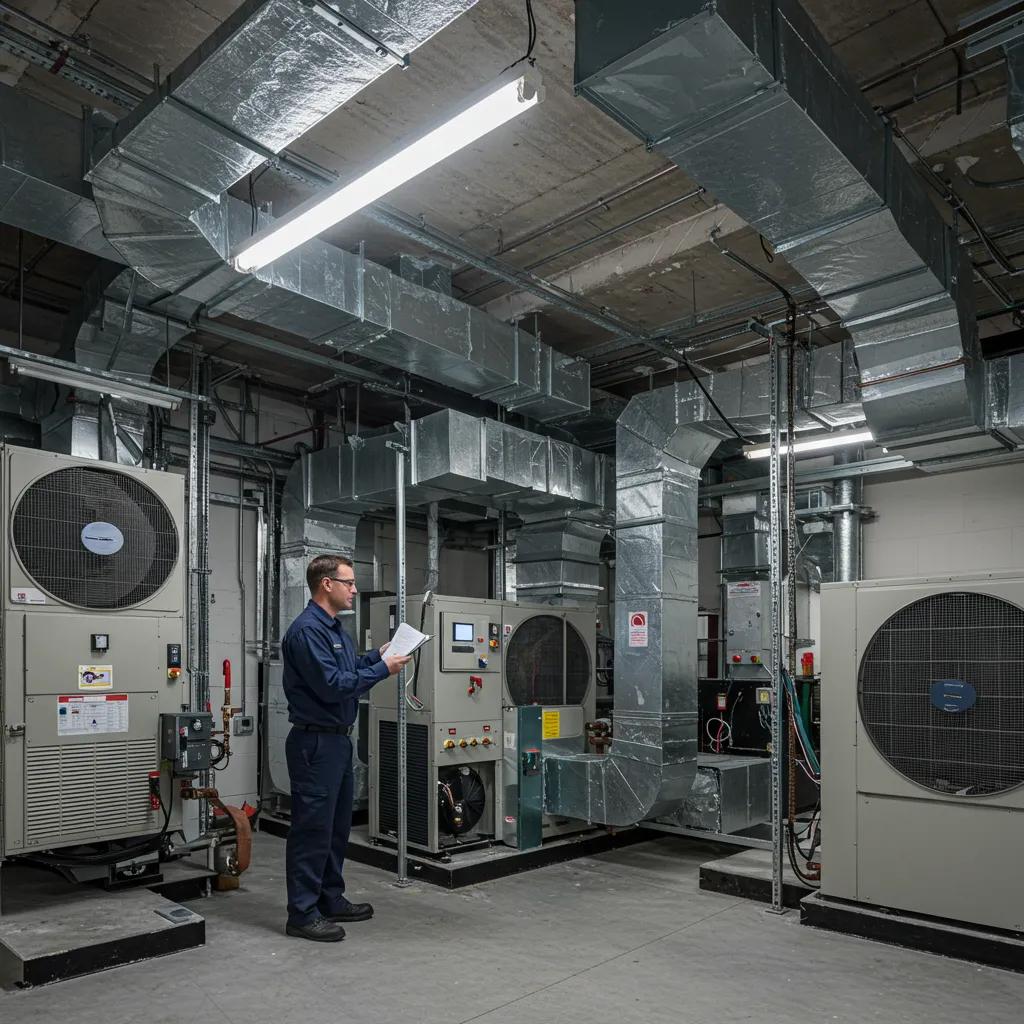
Commercial HVAC upgrades are among the most impactful investments a facility owner can make. When executed properly, these projects deliver measurable reductions in energy consumption while dramatically improving occupant comfort. At CCS Mechanical, our case studies consistently show that a strategic combination of advanced controls, high-efficiency equipment upgrades, and thorough commissioning can cut energy costs by 20% to 35% across a wide range of building types.
Office buildings, retail centers, and hospitality venues each present unique challenges. Office campuses demand precise zone control to accommodate varying occupancy patterns throughout the day. Retail environments require systems that can handle high foot traffic and large open floor plans without creating hot or cold spots. Hotels and resorts need whisper-quiet operation paired with individualized guest room climate control—all while keeping utility bills manageable.
The technologies driving these results have matured significantly in recent years. Variable-speed drives (VSDs) allow motors on fans and pumps to modulate output based on real-time demand, eliminating the energy waste of constant-speed operation. Economizers leverage favorable outdoor conditions to provide free cooling, reducing compressor runtime during mild weather. Variable Refrigerant Flow (VRF) systems deliver simultaneous heating and cooling across different zones with exceptional part-load efficiency. Modern high-efficiency chillers achieve coefficients of performance that were unheard of a decade ago. And tying it all together, Building Automation Systems (BAS) provide the intelligence layer that optimizes every component in concert.
What separates a successful commercial HVAC upgrade from a mediocre one is commissioning. Every system CCS Mechanical installs undergoes rigorous functional performance testing to verify that design intent matches real-world operation. This step alone frequently uncovers control sequences that need fine-tuning, sensor calibrations that are off, or scheduling conflicts that waste energy during unoccupied hours.
Engineering Success Stories in Industrial HVAC
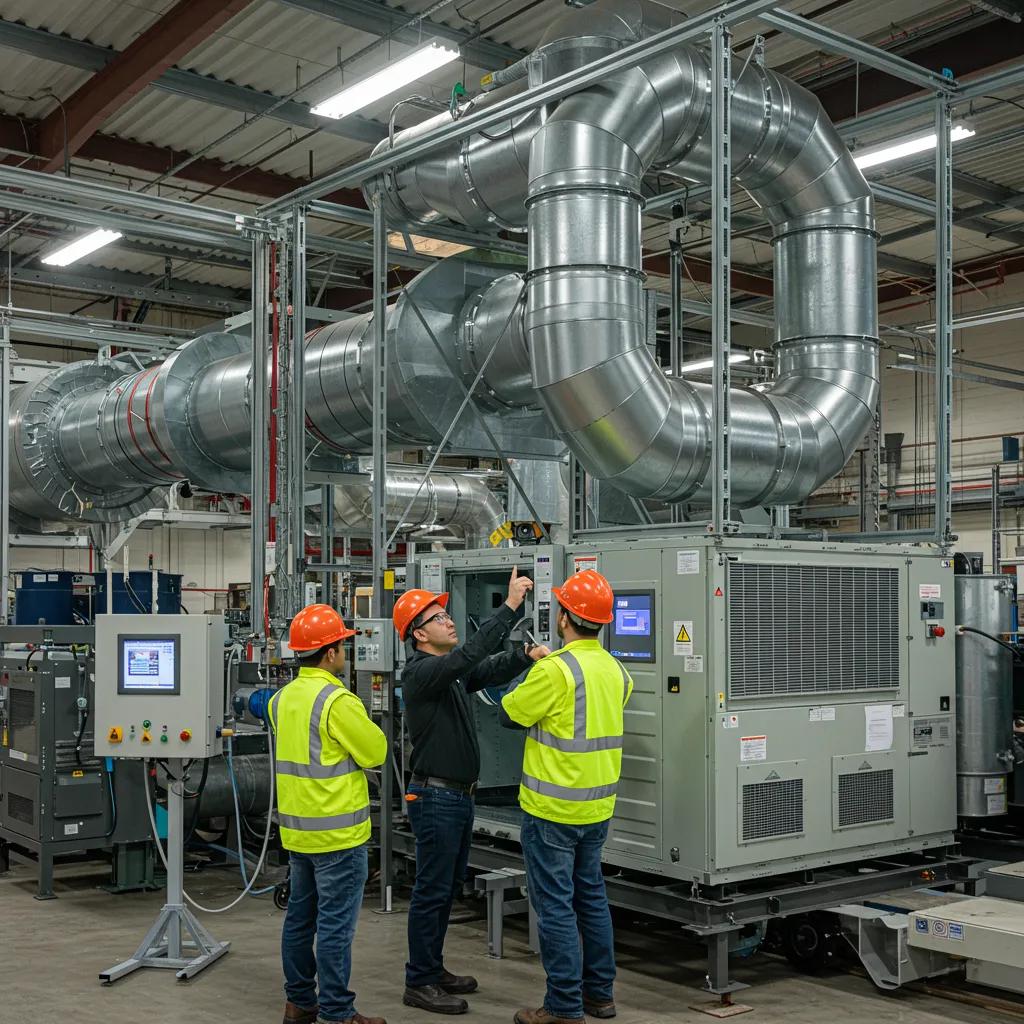
Industrial environments push HVAC engineering to its limits. Manufacturing floors generate enormous heat loads, food processing plants demand strict temperature and humidity control for product safety, and metal fabrication shops require ventilation systems that can handle airborne particulates and high ambient temperatures. Each of these settings calls for custom-engineered solutions that go well beyond catalog equipment selection.
The following table highlights three industrial projects where CCS Mechanical delivered engineered solutions that solved persistent operational challenges:
| Facility Type | Engineering Solution | Measurable Outcome |
|---|---|---|
| Manufacturing Plant | Desiccant dehumidification system with heat recovery | 42% reduction in moisture-related product defects |
| Food Processing Facility | Custom air handling unit with precision humidity control | 28% reduction in total HVAC energy consumption |
| Metal Fabrication Shop | CAD-designed ductwork and custom sheet metal fabrication | 35% faster installation with improved airflow distribution |
In the manufacturing plant project, excessive humidity on the production floor was causing material defects that led to costly rework and waste. Our engineering team designed a desiccant dehumidification system with integrated heat recovery that maintained precise humidity setpoints regardless of outdoor conditions. The 42% reduction in defects translated directly to improved product quality and significant savings on the bottom line.
The food processing facility required a custom air handling unit capable of maintaining temperature within plus or minus one degree Fahrenheit and relative humidity within two percentage points. Off-the-shelf equipment simply could not meet these tolerances. Our in-house fabrication capabilities allowed us to design, build, and install a purpose-built AHU that exceeded specifications while consuming 28% less energy than the legacy system it replaced.
For the metal fabrication shop, CCS Mechanical leveraged CAD-designed ductwork and custom sheet metal fabrication to create an optimized ventilation layout. Prefabricated components reduced on-site installation time by 35%, minimizing disruption to production while delivering superior airflow distribution that improved both air quality and worker comfort.
Demonstrating Measurable Energy Savings
Quantifiable results are the cornerstone of every HVAC case study. Facility owners and operators need hard data—not promises—to justify capital expenditures on system upgrades. CCS Mechanical employs rigorous Measurement and Verification (M&V) methodology aligned with the International Performance Measurement and Verification Protocol (IPMVP) to document energy savings with confidence.
| Project | Before (Annual kWh) | After (Annual kWh) | Savings |
|---|---|---|---|
| Office Campus Chiller Replacement | 1,200,000 | 900,000 | 25% |
| Retail Center VRF Retrofit | 840,000 | 672,000 | 20% |
| Hospital AHU Modernization | 2,100,000 | 1,680,000 | 20% |
The key metrics we track include kilowatt-hours (kWh) for total energy consumption, kilowatts (kW) for peak demand reduction, and percentage savings normalized against weather data and occupancy patterns. Baseline energy consumption is established using a minimum of 12 months of pre-retrofit utility data, and post-retrofit performance is monitored continuously using interval metering and BAS trend data.
Heat pump optimization has emerged as one of the most effective strategies for reducing energy consumption in mild to moderate climates. By upgrading aging air-cooled systems to high-efficiency heat pumps with variable-speed compressors, several CCS Mechanical projects have achieved 30% or greater reductions in heating and cooling energy. In facilities where simultaneous heating and cooling loads exist, heat recovery heat pumps capture rejected heat from cooling zones and redirect it to heating zones, effectively providing heating energy at no additional cost.
Chiller plant optimization delivers similarly impressive results. Replacing fixed-speed chillers with variable-speed magnetic-bearing models, adding waterside economizers, and implementing optimal chiller sequencing through the BAS can reduce chiller plant energy consumption by 25% to 40%. When paired with condenser water reset strategies and variable-speed cooling tower fans, the entire chiller plant operates at peak efficiency across all load conditions.
Building Automation System Integration
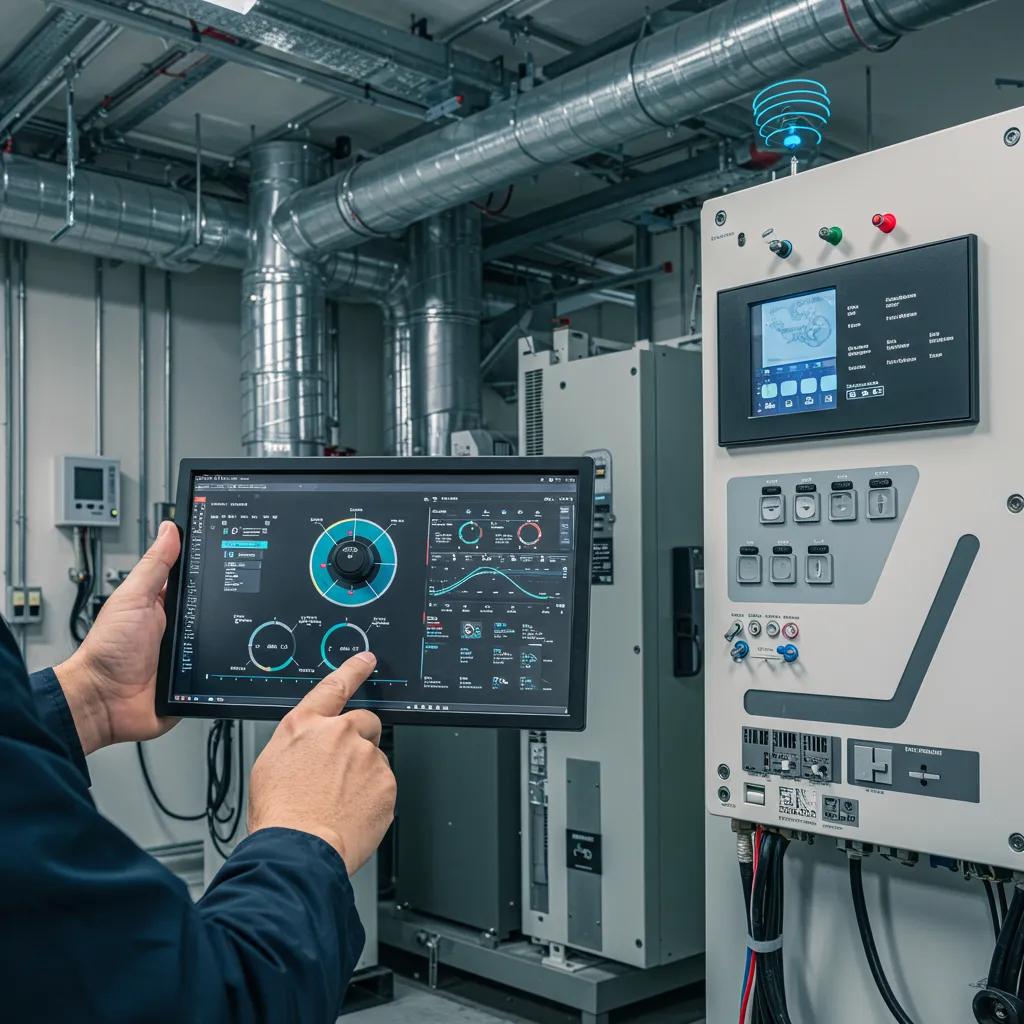
A Building Automation System is the central nervous system of a modern HVAC installation. Without intelligent controls, even the most efficient equipment will underperform. CCS Mechanical integrates BAS platforms that deliver real-time visibility, automated optimization, and actionable data across every system in the building.
The core benefits of a well-implemented BAS integration include:
- Energy savings through automated scheduling and optimization — The BAS continuously adjusts setpoints, staging, and airflow based on occupancy, weather, and time-of-day schedules. Demand-controlled ventilation reduces outdoor air intake when spaces are partially occupied, while optimal start/stop algorithms minimize pre-conditioning time without sacrificing comfort.
- Fewer service calls through predictive maintenance alerts — Trend data and fault detection algorithms identify equipment issues—such as degraded compressor performance, clogged filters, or stuck dampers—before they escalate into failures. This proactive approach reduces emergency service calls and extends equipment lifespan.
- Improved occupant comfort with real-time zone control — Individual zone control ensures that every area of the building meets its temperature and humidity setpoints. Hot and cold complaints drop dramatically when the BAS can respond to conditions in real time rather than relying on fixed schedules.
- Centralized reporting for compliance and budgeting — Automated energy reports, equipment runtime summaries, and alarm histories are available from a single dashboard. This data supports utility rebate applications, ENERGY STAR benchmarking, and capital planning for future upgrades.
Multi-site optimization takes BAS integration to the next level. Organizations with multiple facilities can aggregate data from all locations into a centralized enterprise management platform. This enables portfolio-wide energy benchmarking, identification of underperforming sites, and standardization of control sequences across the entire portfolio.
The latest BAS platforms leverage IoT sensors and edge controllers to extend monitoring and control to previously unmanaged equipment. Wireless sensors can be deployed in minutes without running conduit or pulling wire, making it cost-effective to monitor supplemental systems like unit heaters, exhaust fans, and refrigeration equipment. Edge controllers process data locally and communicate with the cloud, reducing network bandwidth requirements while enabling real-time response to changing conditions.
Healthcare and Education Success Stories
Healthcare and education facilities represent some of the most demanding HVAC applications. In hospitals, air quality is not just a comfort issue—it is a patient safety imperative. In schools, proper ventilation directly impacts student health, cognitive performance, and attendance. CCS Mechanical has delivered proven results in both sectors.
Hospital HVAC upgrades require specialized expertise that goes beyond standard commercial practice. Operating rooms, isolation rooms, and sterile processing departments demand HEPA filtration to maintain particulate-free environments. Positive and negative pressurization must be precisely maintained to prevent cross-contamination between clean and infectious zones. And system redundancy is non-negotiable—a failure in a critical-care HVAC system can have life-threatening consequences.
CCS Mechanical approaches hospital projects with a focus on code compliance, infection control, and operational continuity. Our teams work closely with hospital facility managers and infection preventionists to ensure that every upgrade meets or exceeds ASHRAE 170 and FGI Guidelines requirements. Staged construction schedules allow us to perform work without disrupting patient care, and temporary HVAC measures maintain required conditions throughout the construction process.
School HVAC solutions prioritize indoor air quality and energy efficiency in equal measure. Demand-controlled ventilation (DCV) systems use CO2 sensors to modulate outdoor air delivery based on actual classroom occupancy. When a classroom is full, the system increases fresh air to maintain healthy CO2 levels. When the room empties, airflow is reduced to save energy. CO2 monitoring dashboards give administrators real-time visibility into air quality across every classroom, building confidence among staff and parents that student health is being protected.
| Metric | Typical Improvement | Standard Reference |
|---|---|---|
| Indoor air quality (particulate reduction) | 30–60% reduction | ASHRAE 62.1 / ASHRAE 170 |
| Pressure differential (isolation rooms) | Maintained at −0.01″ W.C. minimum | FGI Guidelines / CDC recommendations |
| Ventilation per occupant | 20–40% improvement over baseline | ASHRAE 62.1 minimum requirements |
These improvements are not theoretical—they are documented outcomes from real CCS Mechanical projects. In one hospital upgrade, replacing aging AHUs with units featuring MERV-16 pre-filtration and HEPA final filtration reduced airborne particulate counts by over 55% in surgical suites. In a school district retrofit, demand-controlled ventilation improved per-occupant ventilation rates by 35% while simultaneously reducing HVAC energy consumption by 22%.
How Projects Empower Technicians and Engineers
Every HVAC project is an opportunity for professional growth. The complex systems that CCS Mechanical designs, installs, and commissions require skilled technicians and engineers who understand not just individual components but how entire systems interact. Our project-based approach to skills development ensures that team members gain hands-on experience with the latest technologies and methodologies.
Commissioning is one of the most powerful learning experiences in the HVAC industry. During the commissioning process, technicians and engineers systematically verify that every component operates as designed. They test control sequences, measure airflow and water flow rates, verify electrical connections, and document performance data. This process builds deep understanding of system behavior that cannot be gained from classroom training alone.
Troubleshooting on complex projects sharpens diagnostic skills that set top-tier technicians apart. When a VRF system is not achieving expected efficiency, or a BAS control sequence is not maintaining setpoints, our team members learn to methodically isolate variables, analyze trend data, and identify root causes. These skills are transferable across every project type and equipment platform.
Career growth at CCS Mechanical follows a structured path that rewards both technical expertise and leadership development:
- Technical mastery through progressive project complexity — Team members advance from standard commercial installations to complex industrial and healthcare projects, building expertise in specialized systems like desiccant dehumidification, cleanroom HVAC, and critical-environment controls.
- Leadership development through project management roles — Experienced technicians transition into lead roles where they coordinate crews, manage schedules, and serve as the primary technical resource on job sites. This pathway develops both technical and interpersonal skills essential for career advancement.
- Certification and continuing education support — CCS Mechanical invests in industry certifications including EPA 608, NATE, and manufacturer-specific training. Ongoing education ensures our team stays current with evolving codes, technologies, and best practices.
CCS Mechanical Capabilities
CCS Mechanical delivers end-to-end HVAC solutions from initial concept through long-term operational support. Our integrated capabilities eliminate the coordination gaps that occur when multiple contractors are involved, ensuring that design intent is preserved through fabrication, installation, and commissioning.
| Capability | Description | Client Benefit |
|---|---|---|
| Estimating & Pre-Construction | Detailed cost analysis, value engineering, and project scheduling | Accurate budgets and realistic timelines from day one |
| CAD & Custom Fabrication | In-house CAD design and sheet metal fabrication shop | Faster turnaround, tighter tolerances, and reduced material waste |
| Commissioning & Optimization | Functional performance testing, BAS integration, and M&V reporting | Verified performance that matches or exceeds design specifications |
What makes CCS Mechanical uniquely positioned to deliver on these case studies is the depth and breadth of our in-house capabilities:
- Single-source accountability — From engineering and estimating through fabrication, installation, and commissioning, one team owns every phase of the project. This eliminates finger-pointing between subcontractors and ensures seamless coordination from start to finish.
- In-house fabrication for speed and quality — Our sheet metal shop produces custom ductwork, fittings, and specialty components to exact specifications. Prefabrication reduces on-site labor, minimizes waste, and accelerates project timelines—all while maintaining the quality control that comes from building it ourselves.
- Proven expertise across market sectors — Commercial offices, industrial manufacturing, healthcare, education, hospitality—CCS Mechanical has delivered successful projects across every major building type. This cross-sector experience means we bring lessons learned and best practices from every project to yours.
If your facility is facing rising energy costs, comfort complaints, or aging HVAC equipment, these case studies demonstrate what is possible with the right engineering partner. Contact CCS Mechanical today to discuss how we can deliver measurable results for your next HVAC project.