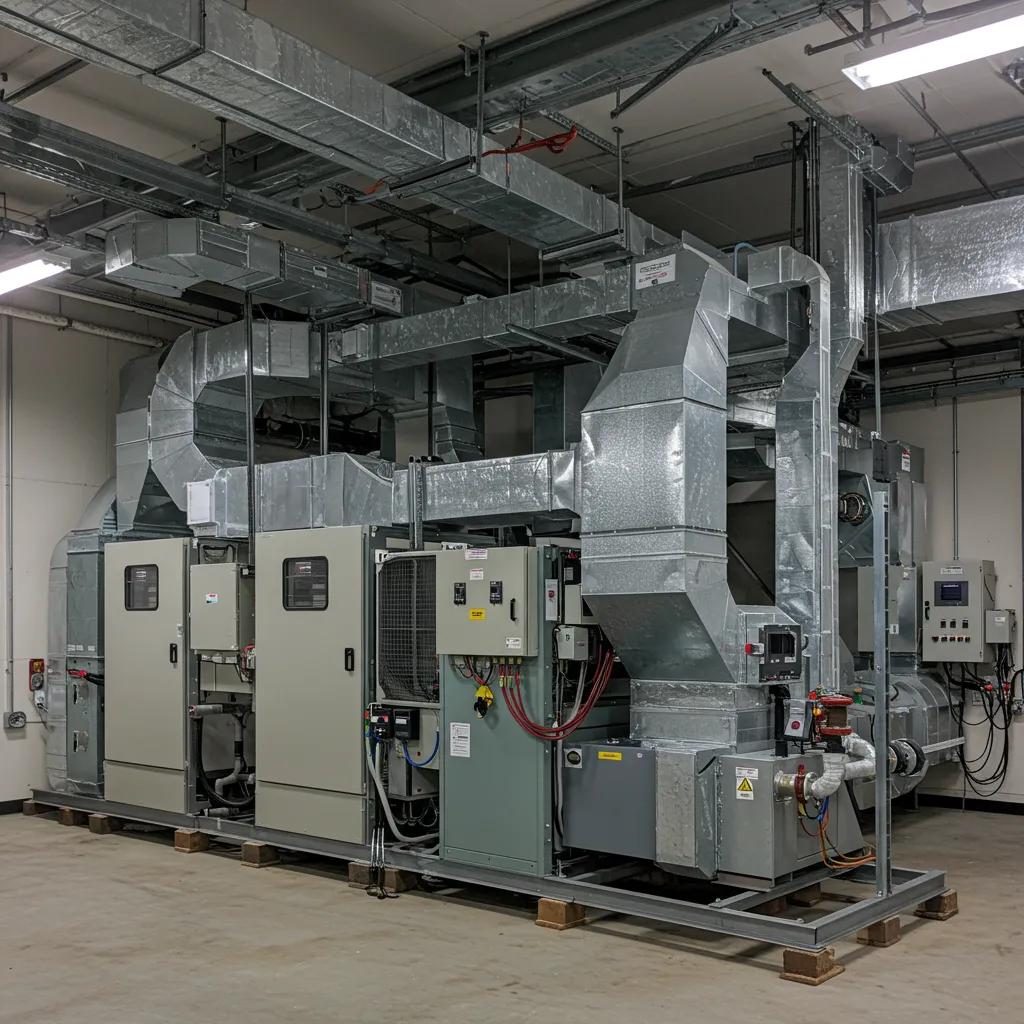
Whether you manage a commercial building, operate an industrial facility, or are exploring a career in the HVAC industry, you likely have questions about how heating, ventilation, and air conditioning systems work, how to keep them running efficiently, and what to do when something goes wrong. This comprehensive guide answers the most frequently asked questions about commercial and industrial HVAC systems, with expert insight from the team at CCS Mechanical Inc.
How Often Should Commercial HVAC Systems Be Serviced?
The frequency of HVAC maintenance depends on the type of system, its age, the environment it operates in, and how heavily it is used. As a general rule, commercial HVAC systems should receive professional service at least twice per year, but many systems benefit from more frequent attention. Below is a breakdown of recommended maintenance intervals by system type.
| System Type | Full Service | Interim Checks |
|---|---|---|
| Rooftop Units (RTUs) | Biannual (spring & fall) | Monthly filter checks |
| Chillers | Annual comprehensive | Quarterly inspections |
| Air Handling Units (AHUs) | Quarterly | Monthly filter & belt checks |
| Variable Refrigerant Flow (VRF) | Annual | Biannual performance reviews |
Regular service visits allow technicians to catch small issues before they escalate into costly repairs or unexpected downtime. For facilities in harsh environments such as coastal or high-dust locations, more frequent service intervals are strongly recommended.
Recommended Maintenance Checklist
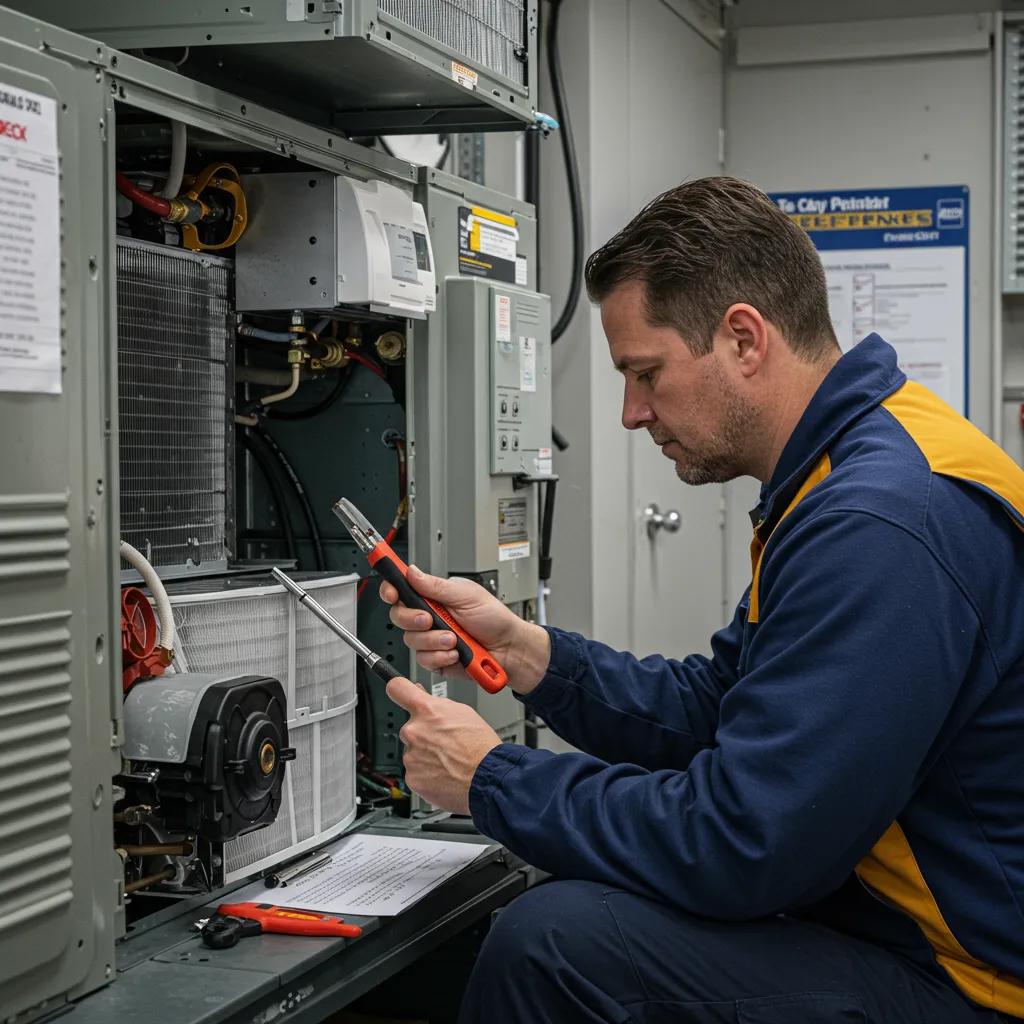
A thorough preventive maintenance visit should cover the following areas to ensure your system operates at peak performance:
- Filters: Inspect and replace air filters to maintain proper airflow and indoor air quality.
- Coils: Clean evaporator and condenser coils to ensure efficient heat transfer.
- Belts and bearings: Check for wear, tension, and alignment to prevent mechanical failures.
- Refrigerant levels: Verify charge levels and inspect for leaks that can reduce cooling capacity.
- Electrical connections: Tighten terminals, measure voltage and amperage, and inspect contactors.
- Thermostat calibration: Confirm that sensors and controls are reading and responding accurately.
- Drain lines: Clear condensate drains to prevent water damage and microbial growth.
- Safety controls: Test high-pressure cutouts, flame sensors, and other safety devices.
- Ductwork: Inspect accessible duct sections for leaks, damage, or insulation deterioration.
How Preventive Maintenance Improves Energy Efficiency
HVAC systems that receive regular maintenance consume significantly less energy than neglected equipment. Dirty coils force compressors to work harder and run longer. Clogged filters restrict airflow, causing the system to compensate by increasing fan speeds or cycling more frequently. Refrigerant that is even slightly low can reduce a system's cooling capacity by 10 to 20 percent while still consuming the same amount of electricity.
According to ASHRAE and Department of Energy studies, properly maintained commercial HVAC systems can operate 15 to 25 percent more efficiently than systems that are only serviced reactively. Over the lifespan of a system, that translates to thousands of dollars in reduced utility costs and a measurable decrease in your building's carbon footprint.
Signs That a System Needs Repair or Replacement
Even with diligent maintenance, HVAC equipment eventually shows signs of decline. Recognizing these warning signs early helps facility managers make informed decisions and avoid emergency failures:
- Rising energy bills without a corresponding increase in usage indicate the system is losing efficiency.
- Inconsistent temperatures across zones suggest airflow imbalances, failing dampers, or control issues.
- Unusual noises such as grinding, banging, or squealing often point to worn bearings, loose components, or compressor problems.
- Frequent cycling where the system turns on and off rapidly may indicate refrigerant issues, thermostat malfunctions, or oversized equipment.
- Visible corrosion or rust on outdoor units, coils, or piping signals structural degradation.
- Repair costs exceeding 40 percent of the price of a new system suggest that replacement is the more economical choice.
Most Common Problems in Industrial HVAC Systems
Industrial HVAC systems operate under demanding conditions that accelerate wear and create unique failure modes. Understanding the most common problems helps maintenance teams prioritize inspections and allocate budgets effectively. Here are the five most prevalent failure categories in industrial environments:
- Control system faults: Building automation controllers, sensors, and actuators are responsible for coordinating complex system operations. A single faulty sensor can cause an entire zone to overcool or overheat, waste energy, and trigger cascading alarms. Control faults account for a significant portion of all industrial HVAC service calls.
- Refrigerant leaks: Even small leaks degrade cooling capacity and force compressors to work harder. In industrial settings with long refrigerant line runs and vibration exposure, connections and fittings are particularly vulnerable. Leaks also raise environmental and regulatory compliance concerns.
- Airflow imbalance: Ductwork in industrial facilities often spans large distances and serves areas with varying heat loads. Dampers that are stuck, improperly adjusted, or have failed actuators create pressure imbalances that reduce comfort and increase energy consumption.
- Corrosion and environmental damage: Facilities near the coast, chemical processing plants, or environments with high humidity experience accelerated corrosion on coils, cabinets, and piping. In Florida, salt air corrosion is one of the leading causes of premature equipment failure.
- Mechanical wear: Bearings, belts, fan motors, and compressors all have finite lifespans that are shortened by heavy use, poor lubrication, or misalignment. Vibration analysis and predictive maintenance programs can catch mechanical wear before catastrophic failure occurs.
Troubleshooting Industrial HVAC Issues
Effective troubleshooting in industrial HVAC begins with data. Before making any physical adjustments, experienced technicians evaluate three primary metrics that reveal the root cause of most problems:
- Temperature differential (Delta T): Measuring the difference between supply and return air temperatures indicates whether the system is delivering adequate heating or cooling. A Delta T that is too low suggests refrigerant issues, dirty coils, or airflow restrictions. A Delta T that is too high can indicate low airflow.
- Static pressure readings: High static pressure points to restrictions such as clogged filters, closed dampers, or undersized ductwork. Low static pressure may indicate duct leaks or disconnections. Comparing readings at multiple points in the duct system helps isolate the problem location.
- Electrical measurements: Amperage draws on compressors, fan motors, and heaters reveal whether components are operating within their designed parameters. Higher-than-normal amperage often indicates mechanical resistance, while lower amperage can point to a failing capacitor or winding issue.
Typical Causes of Failures
Understanding why systems fail helps prevent repeat issues and guides long-term capital planning decisions. The most common root causes of industrial HVAC failures include:
- Deferred maintenance: Skipping scheduled service visits allows minor issues to compound. A dirty filter today becomes a frozen coil next month and a burned-out compressor the month after.
- Improper installation: Systems that were not correctly sized, piped, or ducted during initial installation will underperform throughout their entire service life regardless of how well they are maintained.
- Age and obsolescence: Equipment beyond its expected service life operates less efficiently, requires more frequent repairs, and may no longer have readily available replacement parts.
- Environmental factors: Exposure to corrosive chemicals, excessive dust, extreme temperatures, and coastal salt air accelerates degradation of every component.
- Operational misuse: Running systems outside their design parameters, such as continuously operating emergency backup units as primary equipment, leads to premature failure.
Humidity Control in Florida
Florida's subtropical climate presents unique challenges for commercial and industrial HVAC systems. With average outdoor humidity levels regularly exceeding 70 percent, controlling indoor moisture is just as important as controlling temperature. Excess humidity leads to mold growth, corrosion of equipment and building materials, product quality issues in manufacturing, and occupant discomfort even when temperatures are within normal ranges.
Effective humidity control in Florida requires a multi-faceted approach. Properly sized dehumidification equipment, correctly configured economizer lockouts, and well-maintained drain pans and condensate systems are essential. Building envelope integrity also plays a critical role, as air infiltration from outside introduces massive amounts of moisture that the HVAC system must then remove.
At CCS Mechanical, our technicians are specifically trained to address Florida's humidity challenges. We design and maintain systems that keep relative humidity between 40 and 60 percent, the range recommended by ASHRAE for both occupant health and building preservation.
Skills and Certifications for HVAC Technicians
The HVAC industry offers diverse career paths, each requiring a specific combination of technical knowledge, hands-on skills, and professional certifications. Whether you are entering the trade or looking to advance, understanding these requirements helps you plan your career development effectively.
| Role | Key Certifications | Core Skills |
|---|---|---|
| HVAC Technician | EPA 608 Universal, NATE | Diagnostics, refrigerant handling, electrical troubleshooting, brazing |
| Controls Specialist | Niagara N4, Tridium, BACnet | Building automation programming, network configuration, system integration |
| Mechanical Engineer | PE License, LEED AP | Load calculations, system design, energy modeling, project management |
| Sheet Metal Fabrication | SMACNA, OSHA 30 | Ductwork fabrication, welding, blueprint reading, precision measurement |
Essential Interview Questions
If you are preparing for an HVAC technician interview, be ready to demonstrate both theoretical knowledge and practical problem-solving ability. Common interview questions in the industry include:
- Explain the refrigeration cycle and identify what happens at each stage, including the state changes of the refrigerant through the compressor, condenser, expansion device, and evaporator.
- Describe your approach to troubleshooting a system that is running but not cooling. Interviewers want to see a systematic, methodical approach rather than random guessing.
- What safety procedures do you follow when working with high-voltage equipment, refrigerants, or on elevated platforms? Safety awareness is non-negotiable in this industry.
- How do you read and interpret electrical schematics, wiring diagrams, and equipment nameplate data?
- Describe a challenging repair you completed and what you learned from the experience. This reveals your hands-on experience and problem-solving mindset.
Career Path at CCS Mechanical
CCS Mechanical is committed to developing the next generation of skilled HVAC professionals. Our structured career path takes technicians from entry-level positions through advanced specializations:
- Apprentice Technician: Learn fundamentals through on-the-job training alongside experienced mentors. Focus on basic maintenance procedures, safety protocols, and tool proficiency.
- Journeyman Technician: Handle independent service calls, diagnose complex issues, and perform major repairs. Pursue EPA 608 certification and NATE specializations.
- Lead Technician: Oversee installation projects, train junior staff, and manage key commercial accounts. Develop expertise in specific system types or building categories.
- Supervisor or Specialist: Move into management, controls engineering, energy auditing, or project management. Pursue advanced certifications and industry leadership roles.
We invest in our team through continuing education, tuition assistance, manufacturer training programs, and opportunities to earn advanced certifications on the job.
Most Valued Certifications
In the commercial and industrial HVAC sector, certain certifications carry significant weight with employers and clients. The most valued credentials include:
- EPA 608 Universal: Required by federal law to handle refrigerants. The Universal certification covers all equipment types and is the minimum credential for any HVAC technician.
- NATE (North American Technician Excellence): The industry's most recognized competency certification. NATE-certified technicians demonstrate verified knowledge in installation and service across multiple system types.
- OSHA 10 or OSHA 30: Safety certifications that demonstrate awareness of workplace hazards, fall protection, electrical safety, and hazardous materials handling.
- Building Automation Certifications (Niagara N4, Tridium): Essential for technicians working with modern building management systems that control HVAC, lighting, and energy management.
- LEED AP (Leadership in Energy and Environmental Design): Valuable for professionals involved in sustainable building design and energy-efficient system specification.
How to Improve HVAC Energy Efficiency
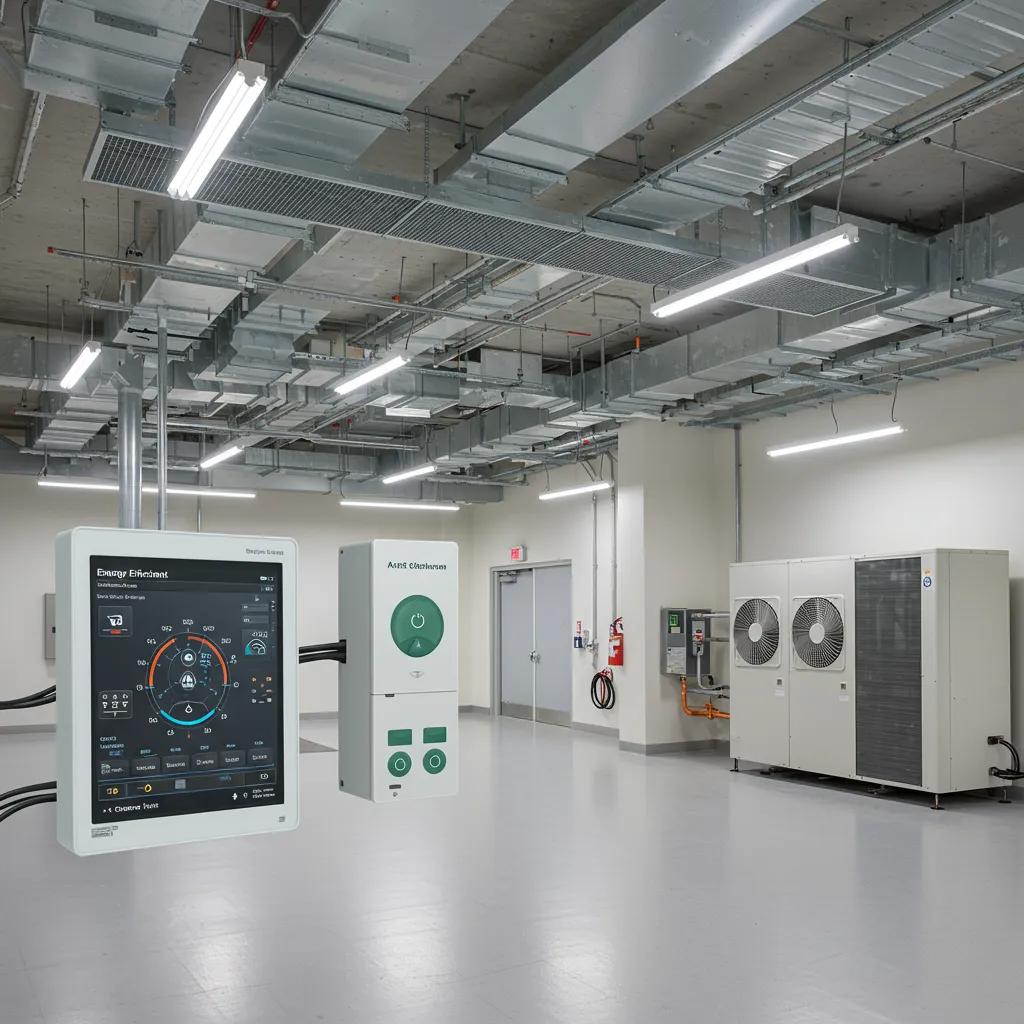
Energy costs represent one of the largest operating expenses for commercial and industrial buildings, and HVAC systems typically account for 40 to 60 percent of total energy consumption. Implementing the right efficiency technologies can dramatically reduce these costs while improving occupant comfort and reducing environmental impact.
| Technology | Energy Savings | Best Application |
|---|---|---|
| Building Automation Systems (BAS) | 15–30% | Multi-zone commercial buildings |
| Variable Refrigerant Flow (VRF) | 20–40% | Office buildings, hotels, mixed-use facilities |
| Variable Speed Drives (VSD) | 20–50% | Fans, pumps, and compressors in any facility |
| Economizers | 10–20% | Climates with favorable outdoor conditions |
Building Automation Systems
A Building Automation System (BAS) serves as the central nervous system of a commercial building's HVAC infrastructure. By connecting sensors, controllers, and actuators throughout the facility, a BAS enables real-time monitoring and automated optimization of every aspect of climate control.
Modern BAS platforms provide scheduling capabilities that align HVAC operation with actual building occupancy. Unoccupied spaces receive reduced conditioning, while occupied areas maintain optimal comfort. Demand-controlled ventilation adjusts fresh air intake based on CO2 levels rather than running at a fixed rate, eliminating the energy waste of over-ventilating empty spaces.
Advanced analytics within BAS platforms can identify equipment degradation, detect faults, and generate actionable maintenance alerts before problems affect occupant comfort or energy consumption. CCS Mechanical designs, installs, and maintains BAS solutions that deliver measurable energy savings for our commercial and industrial clients.
Zone Temperature Control
Treating an entire building as a single temperature zone wastes energy and creates comfort complaints. Different areas have different heat loads based on occupancy, equipment, solar exposure, and function. A server room has very different requirements than a conference room or an open office floor.
Effective zone control divides the building into areas with similar thermal characteristics and provides independent temperature regulation for each zone. This is achieved through a combination of multiple thermostats or sensors, zone dampers in the ductwork, variable air volume (VAV) boxes, and properly configured control sequences.
When zone control is properly implemented, areas that need more cooling receive it without overcooling adjacent spaces. Areas that are unoccupied can be set back to energy-saving temperatures without affecting the rest of the building. The result is lower energy consumption, fewer comfort complaints, and more precise environmental control.
Variable Refrigerant Flow Benefits
VRF technology represents one of the most significant advances in commercial HVAC efficiency. Unlike traditional systems that operate at full capacity or not at all, VRF systems continuously modulate refrigerant flow to match the exact cooling or heating demand of each zone.
The key advantages of VRF systems include:
- Simultaneous heating and cooling: Heat recovery VRF systems can heat one zone while cooling another, transferring energy between zones rather than generating and rejecting it separately.
- Precise temperature control: Each indoor unit operates independently, maintaining its zone within one degree of the setpoint.
- Reduced ductwork: VRF systems use refrigerant piping instead of large duct runs, simplifying installation and reducing the space required for mechanical systems.
- Quiet operation: Indoor units operate at very low sound levels, making VRF ideal for offices, hotels, hospitals, and educational facilities.
- Scalability: Systems can be expanded by adding indoor units to existing outdoor units without replacing the entire system.
Key ASHRAE Standards and Compliance
The American Society of Heating, Refrigerating and Air-Conditioning Engineers (ASHRAE) develops the standards and guidelines that govern the design, installation, and operation of HVAC systems across the United States and much of the world. Understanding these standards is essential for building owners, facility managers, and HVAC professionals.
ASHRAE Influence on Design
ASHRAE standards directly influence how commercial HVAC systems are designed, specified, and operated. The most impactful standards include:
- ASHRAE Standard 90.1 (Energy Standard for Buildings): Establishes minimum energy efficiency requirements for building envelopes, HVAC systems, lighting, and other energy-consuming systems. Most building codes reference Standard 90.1, making compliance a legal requirement.
- ASHRAE Standard 62.1 (Ventilation for Acceptable Indoor Air Quality): Defines the minimum ventilation rates and air treatment measures needed to provide acceptable indoor air quality. This standard determines how much outdoor air must be introduced and how it must be filtered.
- ASHRAE Standard 55 (Thermal Environmental Conditions): Specifies the combinations of temperature, humidity, air speed, and radiant temperature that create thermally comfortable environments for the majority of occupants.
- ASHRAE Guideline 36 (High-Performance Sequences of Operation): Provides standardized control sequences for common HVAC system types that optimize energy efficiency while maintaining comfort and air quality.
Refrigerant Regulations
The HVAC industry is undergoing a significant transition in the refrigerants used in commercial and industrial systems. Driven by environmental regulations aimed at reducing greenhouse gas emissions, the industry is moving away from high global warming potential (GWP) refrigerants toward lower-GWP alternatives.
The AIM Act and EPA regulations are phasing down the production and import of hydrofluorocarbons (HFCs) such as R-410A, which has been the dominant refrigerant in commercial HVAC for over two decades. The transition is moving toward A2L refrigerants, which are classified as mildly flammable but have significantly lower GWP values. Key replacements include R-32, R-454B, and R-1234ze, all of which offer comparable or improved efficiency with a fraction of the environmental impact.
This regulatory shift has practical implications for facility managers and building owners. New equipment purchases should consider future refrigerant availability. Existing systems using high-GWP refrigerants will face rising refrigerant costs as supplies are phased down. Retrofit and replacement planning should factor in the long-term refrigerant landscape.
CCS Mechanical Regulatory Compliance
CCS Mechanical stays at the forefront of regulatory changes to ensure our clients remain compliant and well-positioned for the future. Our approach includes:
- Ongoing technician training on new refrigerant types, handling procedures, and safety requirements for A2L refrigerants.
- Proactive equipment recommendations that account for refrigerant phase-down schedules and long-term availability.
- Code-compliant design and installation that meets or exceeds current ASHRAE standards and Florida Building Code requirements.
- Documentation and record-keeping for refrigerant tracking, leak reporting, and equipment maintenance as required by EPA regulations.
- Energy audits and efficiency assessments that identify opportunities to reduce consumption and meet increasingly stringent efficiency requirements.
Emergency Services and Quotes
When your HVAC system fails unexpectedly, the impact on your business can be immediate and severe. Production may halt, employees and customers are uncomfortable, and perishable goods or sensitive equipment may be at risk. Knowing how to respond and what to expect from your HVAC service provider makes a significant difference in recovery time and cost.
What to Ask When Requesting a Quote
Getting an accurate and comprehensive HVAC quote requires providing the right information and asking the right questions. When requesting a quote from any HVAC contractor, make sure you address these key areas:
- Scope of work: Request a detailed written description of exactly what is included in the quote. Vague descriptions like "install new system" leave too much room for misunderstanding and unexpected costs.
- Equipment specifications: Ask for specific make, model, capacity, and efficiency ratings of all proposed equipment. This allows you to compare quotes on equal footing.
- Warranty coverage: Understand what is covered by the manufacturer warranty, what is covered by the contractor's labor warranty, and for how long each applies.
- Timeline and disruption: Ask how long the work will take and what impact it will have on your building's operations during installation or repair.
- Licensing and insurance: Verify that the contractor holds a valid state mechanical contractor license and carries adequate liability and workers' compensation insurance.
- Maintenance agreements: Ask if a preventive maintenance plan is available and what it includes. Regular maintenance protects your investment and often extends warranty coverage.
Emergency HVAC Repairs
CCS Mechanical provides emergency HVAC repair services for commercial and industrial facilities throughout Central Florida. Our emergency response process is designed to minimize downtime and restore comfort as quickly as possible:
- Rapid response: Contact our team by phone and speak directly with a dispatcher who understands commercial HVAC urgency. We prioritize emergency calls and dispatch technicians with the appropriate skills and equipment.
- On-site diagnosis: Our technicians arrive equipped with diagnostic tools, common replacement parts, and the expertise to assess the situation quickly. We provide a clear explanation of the problem and your options before proceeding with any work.
- Temporary solutions when needed: If a permanent repair requires parts that are not immediately available, we implement temporary measures to maintain operations while the permanent solution is arranged.
- Transparent pricing: Emergency work is billed at clearly communicated rates. There are no hidden fees or surprise charges. We explain all costs before work begins.
Benefits of CCS Mechanical for Industrial HVAC
Choosing the right HVAC partner for your commercial or industrial facility is a decision that affects your operating costs, equipment reliability, and occupant satisfaction for years to come. CCS Mechanical stands apart from other providers in several important ways:
- Deep commercial and industrial expertise: Our technicians specialize in large-scale systems that require a different level of knowledge than residential HVAC. We understand the complexities of chillers, cooling towers, large air handling units, and building automation systems.
- Local Florida knowledge: We understand the specific challenges that Florida's climate, building codes, and environmental conditions present. Our designs and maintenance programs account for humidity, salt air corrosion, and hurricane preparedness.
- Full-service capabilities: From initial design and engineering through installation, commissioning, ongoing maintenance, and emergency repair, CCS Mechanical handles every phase of your HVAC system's lifecycle.
- Preventive maintenance programs: Our tailored maintenance plans keep your systems running efficiently, extend equipment life, and reduce the likelihood of unexpected failures.
- Commitment to quality: Every technician at CCS Mechanical is trained, certified, and committed to delivering work that meets the highest industry standards.
HVAC System Lifespan and Replacement
Understanding the expected lifespan of your HVAC equipment and recognizing when replacement becomes more economical than continued repair are essential skills for effective facility management. Making the right decision at the right time saves money, improves reliability, and takes advantage of the efficiency gains available in modern equipment.
How Long Do Systems Last?
The typical lifespan of commercial HVAC equipment varies by system type, but most systems are designed to deliver 15 to 20 years of reliable service when properly maintained. Here is what you can expect from the most common system types:
- Rooftop units (RTUs): 15 to 20 years. Units in coastal environments or with heavy use may reach end of life sooner.
- Chillers: 20 to 25 years for well-maintained units. Air-cooled chillers typically have shorter lifespans than water-cooled models.
- Boilers: 20 to 30 years depending on water quality and maintenance consistency.
- Air handling units (AHUs): 15 to 25 years. Coils and motors may require replacement during the unit's overall lifespan.
- VRF systems: 15 to 20 years with proper maintenance. Outdoor units in harsh conditions may need earlier replacement.
- Cooling towers: 15 to 25 years depending on water treatment quality and environmental exposure.
These ranges assume consistent preventive maintenance. Systems that are neglected or operated outside their design parameters may fail significantly sooner.
When to Replace vs. Repair
The decision to repair or replace an HVAC system involves balancing several factors. While every situation is unique, there are reliable guidelines that help facility managers make sound decisions:
- The 40 to 50 percent rule: If the cost of a single repair exceeds 40 to 50 percent of the cost of a new replacement system, replacement is generally the better investment. The repaired system is still old, and other components are likely to fail soon.
- Age of the system: If a system is within the last 25 percent of its expected lifespan and facing a major repair, replacement should be seriously considered.
- Frequency of repairs: A system that requires multiple service calls per year beyond routine maintenance is signaling that it is approaching end of life. Track your repair history to identify this trend.
- Efficiency gap: Modern equipment can be 30 to 50 percent more efficient than systems installed 15 or 20 years ago. Calculate the energy savings a new system would provide and factor that into your replacement decision.
- Refrigerant availability: Systems using phased-out refrigerants face rising costs and potential supply shortages. If your system uses R-22 or is approaching the phase-down period for its refrigerant, replacement is strongly recommended.
- Operational requirements: If your building's use has changed since the original HVAC system was installed, the existing equipment may no longer be appropriate for current needs regardless of its condition.
How Preventive Maintenance Extends Lifespan
The single most effective action a building owner can take to extend the life of their HVAC equipment is to invest in consistent preventive maintenance. Systems that receive regular professional service last significantly longer than those that are only addressed when problems arise.
Preventive maintenance extends equipment life in several specific ways:
- Reduced mechanical stress: Clean coils, properly tensioned belts, and well-lubricated bearings reduce the workload on compressors and motors, slowing wear and extending component life.
- Early problem detection: Regular inspections catch small issues like loose electrical connections, minor refrigerant leaks, or worn capacitors before they cause damage to more expensive components.
- Optimal operating conditions: Maintaining proper refrigerant charges, airflow rates, and operating pressures keeps the system running within its design envelope, where it experiences the least stress.
- Corrosion prevention: Regular cleaning, coating treatments, and drain maintenance protect against the corrosion that is especially aggressive in Florida's climate.
- Documentation and trend analysis: A consistent maintenance history provides data that reveals gradual performance changes, allowing proactive intervention before catastrophic failure.
CCS Mechanical's preventive maintenance programs are specifically designed to maximize equipment longevity while optimizing energy efficiency. Our technicians document every visit, track performance trends, and provide actionable recommendations that help our clients get the most out of their HVAC investment.
Have more questions about your commercial or industrial HVAC system? Contact CCS Mechanical today at 352-237-6272 for expert guidance, maintenance programs, and reliable service throughout Central Florida.