Commercial HVAC design-build is a single-source delivery method that unifies engineering, fabrication, and installation under one contractor. Instead of coordinating separate architects, engineers, and installers, building owners work with a single team from concept through commissioning. This integrated approach eliminates the communication gaps, design conflicts, and schedule delays that plague traditional bid-build projects.
For Florida's commercial properties — where year-round cooling demand, humidity control, and hurricane-resilient infrastructure are non-negotiable — design-build offers a smarter path to high-performance mechanical systems. CCS Mechanical Inc. has delivered this integrated approach across Central Florida for decades, handling everything from initial load calculations to long-term preventive maintenance.
Unveiling the Commercial HVAC Design-Build Process
The design-build process replaces the fragmented traditional model with a streamlined, phase-driven workflow. Each phase builds directly on the previous one, reducing rework and keeping the project on schedule.
- Scoping and Needs Assessment — On-site evaluation of existing conditions, occupancy requirements, and performance goals to define the project scope.
- Engineering and CAD Design — Professional engineers develop detailed mechanical plans using 3D modeling and energy simulations to optimize system performance.
- Prefabrication and Shop Fabrication — Ductwork, piping assemblies, and custom components are built in a controlled shop environment for precision and quality.
- Installation, TAB, and Commissioning — Field installation is followed by Testing, Adjusting, and Balancing (TAB) to verify that every zone meets design specifications.
- Preventive Maintenance and Ongoing Support — Scheduled maintenance programs protect the investment, maintain efficiency, and extend equipment life.
Initial Consultation and Needs Assessment
Every design-build project begins with a thorough on-site assessment. CCS Mechanical engineers walk the facility, review existing mechanical drawings, evaluate current equipment condition, and document building envelope characteristics. The goal is to understand not just what the building needs today, but how those needs will evolve.
Key factors evaluated during the initial consultation include building square footage and layout, occupancy density and schedules, process heat loads from industrial equipment, ventilation requirements based on code and occupancy type, existing ductwork and piping infrastructure, and utility capacity. This data drives the engineering phase and ensures the final design addresses every variable — not just peak cooling load.
Engineering and CAD Design
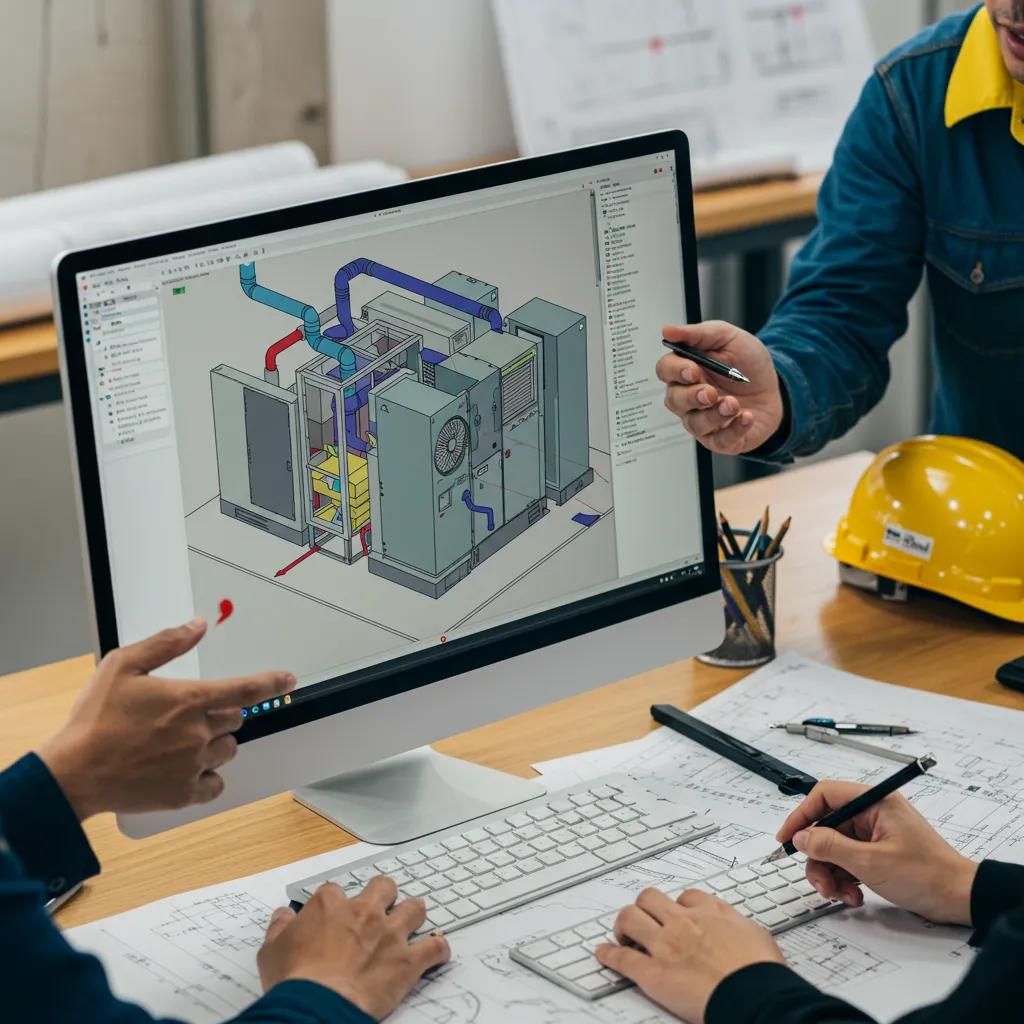
With assessment data in hand, the engineering team develops a comprehensive mechanical design. This includes HVAC load calculations using ASHRAE methodologies, 3D CAD modeling to coordinate with structural and electrical disciplines, duct and piping layouts optimized for airflow and pressure drop, equipment selection based on efficiency ratings, lifecycle cost, and Florida climate demands, and energy modeling to predict annual operating costs.
The 3D modeling process is particularly valuable in retrofit projects where existing conditions create tight spatial constraints. By resolving conflicts digitally before fabrication begins, the team avoids costly field modifications and keeps the installation timeline intact.
In-House Fabrication
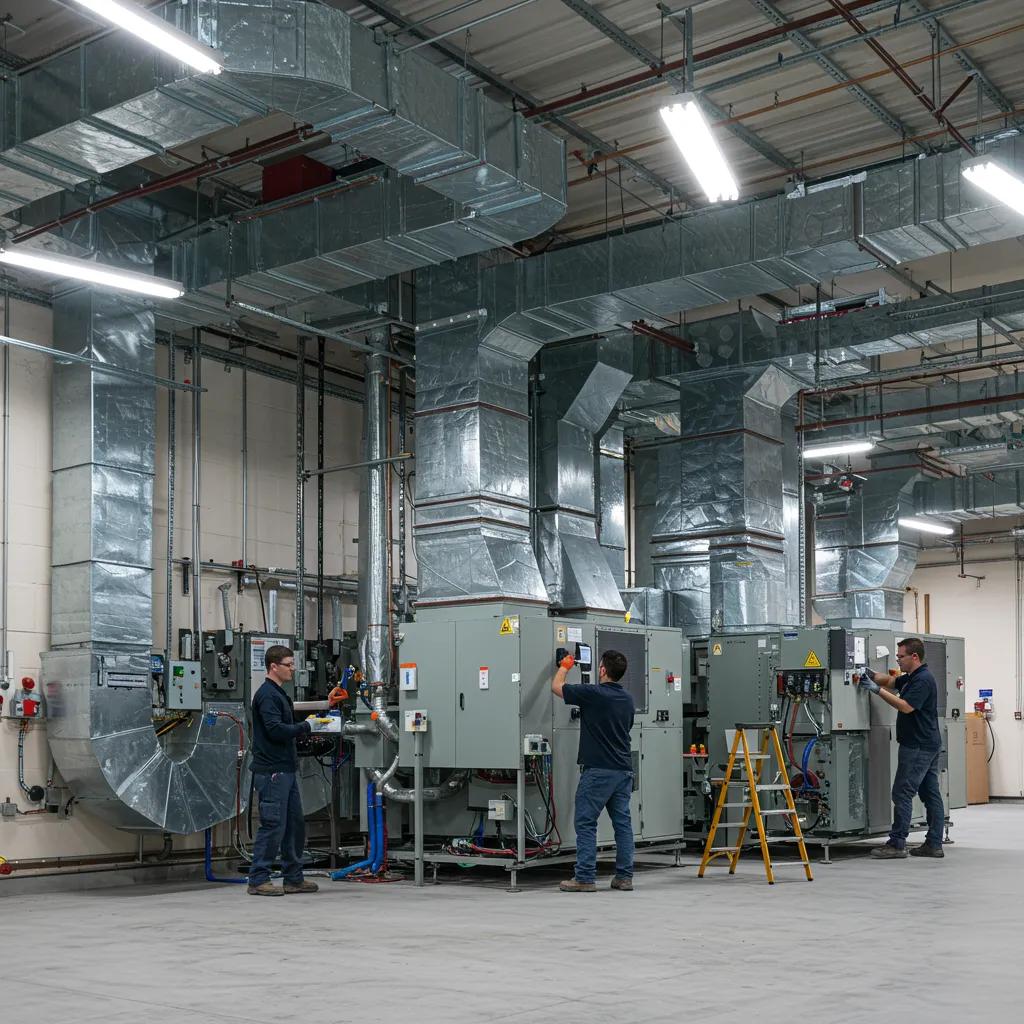
CCS Mechanical's in-house fabrication shop is where engineering precision meets physical reality. Custom ductwork, piping assemblies, equipment curbs, and structural supports are fabricated to exact specifications in a controlled environment. This approach offers several advantages over field fabrication: tighter dimensional tolerances, cleaner welds and seams, reduced on-site labor hours, and less material waste.
Prefabricated components arrive at the job site ready to install, which significantly reduces disruption to occupied buildings. For healthcare facilities and schools where downtime must be minimized, this is a critical advantage.
Installation and Commissioning
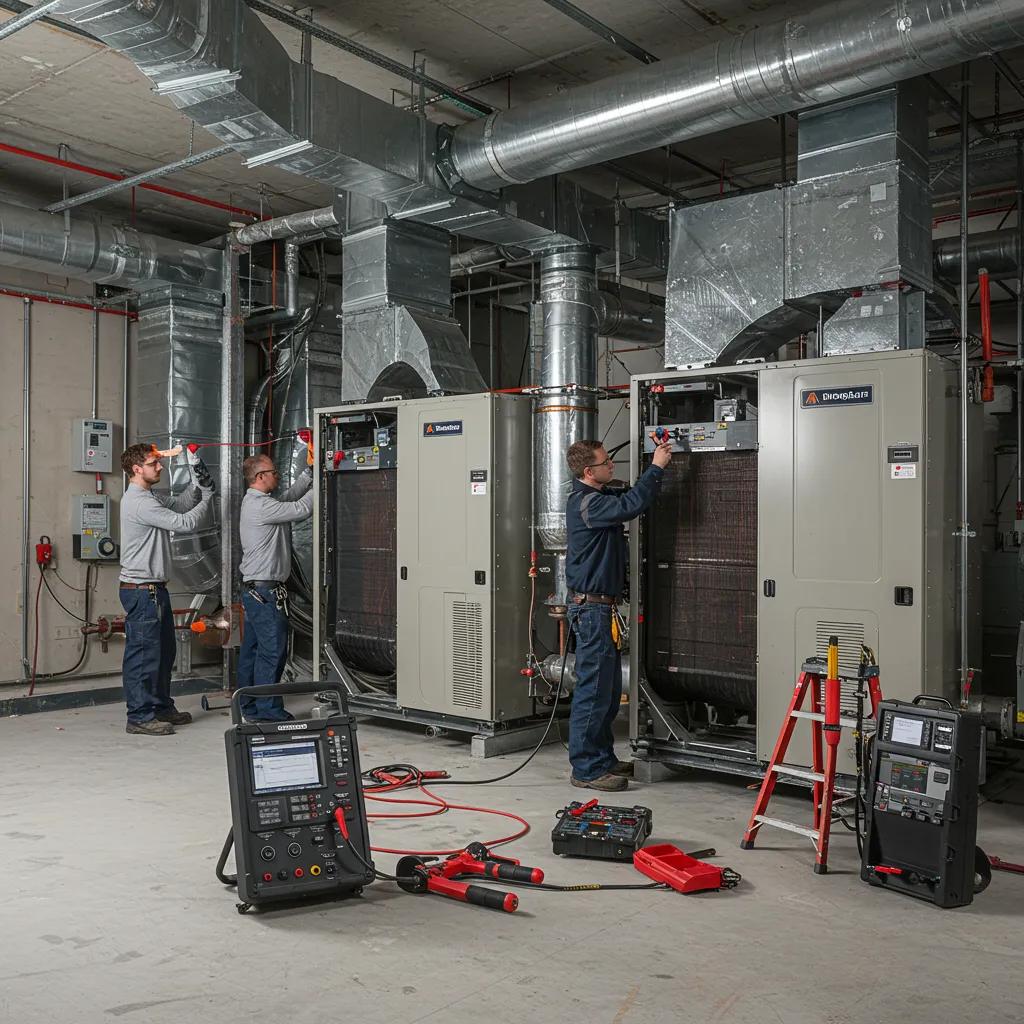
Installation follows the engineered plan precisely, with field supervisors coordinating daily with the design team to address any unforeseen conditions. Because the same organization that designed the system also installs it, there is no finger-pointing between designer and installer when challenges arise.
After installation, the commissioning process verifies that every component operates as intended. This includes Testing, Adjusting, and Balancing (TAB) of all air and water systems, functional performance testing of controls and sequences, verification of refrigerant charges and electrical connections, documentation of as-built conditions, and training for facility maintenance staff. Commissioning is not a formality — it is the quality assurance step that separates professional design-build from standard installation.
Post-Installation Support and Preventive Maintenance
A well-designed and installed HVAC system is only as good as the maintenance program that supports it. CCS Mechanical offers comprehensive preventive maintenance agreements that include scheduled filter changes and coil cleaning, belt and bearing inspections, refrigerant level monitoring, controls calibration and software updates, and emergency response services.
Preventive maintenance extends equipment life by 5 to 10 years on average, reduces energy consumption by maintaining peak efficiency, and catches minor issues before they become major failures. For commercial building owners, this translates directly to lower total cost of ownership.
Core Benefits of Design-Build
The design-build delivery method offers measurable advantages over traditional design-bid-build, particularly for complex commercial HVAC projects.
- Energy Efficiency — Integrated design allows engineers to optimize the entire system holistically, selecting equipment and designing distribution systems that work together for maximum efficiency.
- Single-Point Accountability — One contract, one team, one point of contact. There is no gap between design intent and installed reality.
- Faster Project Delivery — Overlapping design and fabrication phases compress the overall timeline. Construction can begin on early phases while later phases are still being engineered.
- Improved Indoor Air Quality — Purpose-designed ventilation, filtration, and humidity control systems deliver healthier indoor environments from day one.
| Performance Metric | Design-Build Impact |
|---|---|
| Energy Use Intensity (EUI) | 10-30% reduction compared to code-minimum systems |
| First-Cost Savings | 5-15% fewer change orders and rework costs |
| Indoor Air Quality | Enhanced filtration, ventilation, and humidity control |
| Project Timeline | 15-35% shorter than traditional design-bid-build |
Energy Efficiency and Cost Reduction
In Florida, where commercial buildings often run cooling systems 10 to 12 months per year, energy efficiency is not optional — it is a financial imperative. Design-build allows engineers to select variable-speed drives, high-efficiency chillers, energy recovery ventilators, and advanced controls as part of a unified system design rather than as afterthought add-ons.
The result is a mechanical system where every component is sized and configured to complement the others. Variable-speed fans and pumps reduce energy consumption at part-load conditions, which is where commercial buildings operate the vast majority of the time. Energy recovery systems capture waste heat and cooling from exhaust air streams. Smart controls adjust operation based on occupancy, weather, and time of day.
Indoor Air Quality Optimization
Post-pandemic awareness has elevated indoor air quality from a background concern to a top-tier priority for commercial building owners. Design-build projects integrate IAQ strategies from the earliest design stages, including MERV-13 or higher filtration, ultraviolet germicidal irradiation (UVGI) in air handling units, dedicated outdoor air systems (DOAS) for precise ventilation control, humidity management to maintain 40-60% relative humidity, and CO2-based demand-controlled ventilation.
These systems work together to reduce airborne pathogens, control allergens, and create environments where occupants are healthier and more productive.
Streamlining Project Management
Traditional HVAC projects involve separate contracts with designers, engineers, fabricators, and installers. Each handoff creates opportunities for miscommunication, design conflicts, and schedule delays. Design-build eliminates these handoffs by placing all disciplines under one roof.
Project managers at CCS Mechanical coordinate directly with engineering, fabrication, and field teams daily. Decisions that would take weeks of back-and-forth in a traditional model are resolved in hours. Change orders — the most common source of cost overruns in construction — are dramatically reduced because the team designing the system is the same team building and installing it.
Customization in Commercial HVAC
No two commercial buildings have identical HVAC needs. A hospital requires different air change rates, redundancy levels, and filtration standards than a warehouse. A school needs quiet, efficient systems that can be upgraded in phases during summer breaks. Design-build accommodates this diversity by tailoring every aspect of the mechanical system to the building's specific requirements.
Custom solutions include zoned temperature control for multi-tenant buildings, process cooling for industrial manufacturing, clean room HVAC for pharmaceutical or electronics facilities, kitchen ventilation and make-up air for restaurant and hospitality spaces, and data center cooling with N+1 redundancy.
Applications Across Florida Industries
Florida's diverse commercial landscape demands HVAC solutions that address industry-specific challenges. CCS Mechanical's design-build capabilities serve a wide range of sectors.
Industrial Facilities
Industrial HVAC goes far beyond comfort cooling. Manufacturing plants, warehouses, and distribution centers require process heat removal, spot cooling for worker safety, dust and fume extraction, and large-volume ventilation. Design-build is particularly effective for industrial projects because the mechanical system must integrate tightly with production equipment and processes.
CCS Mechanical's in-house fabrication capability is a major advantage for industrial clients. Custom ductwork, exhaust hoods, and filtration systems are fabricated to exact specifications and delivered ready to install. Prefabricated assemblies reduce on-site labor, minimize production disruption, and ensure consistent quality that field fabrication cannot match.
Hospitals and Healthcare
Healthcare facilities have the most demanding HVAC requirements of any building type. Operating rooms require 20 or more air changes per hour with HEPA filtration. Isolation rooms must maintain negative or positive pressure relative to adjacent spaces. Redundant systems must ensure that critical areas remain conditioned even during equipment failures.
Design-build is the preferred delivery method for healthcare HVAC because it allows the engineering team to address these requirements holistically. Redundancy strategies, pressurization schemes, and filtration specifications are integrated into the design from the start rather than layered on after the fact. CCS Mechanical has delivered HVAC solutions for healthcare facilities across Central Florida, understanding the unique regulatory and operational demands of the sector.
Schools and Educational Institutions
School districts across Florida face a common challenge: aging HVAC systems that need replacement on limited budgets and compressed timelines. Summer breaks provide only 8 to 10 weeks for construction, and phased upgrades are often necessary to spread costs across multiple budget cycles.
Design-build excels in this environment. The integrated delivery model compresses timelines, and the ability to phase work across multiple summers allows districts to modernize entire campuses over 2 to 3 years without disrupting the academic calendar. Budget-conscious equipment selection, energy-efficient designs that reduce operating costs, and simple controls that maintenance staff can manage independently are hallmarks of CCS Mechanical's approach to educational facilities.
Commercial Buildings
Office buildings, retail centers, and mixed-use developments benefit from centralized energy plants, building automation system (BAS) integration, and scheduled operation that reduces energy waste during unoccupied hours. Design-build allows the mechanical engineer to coordinate directly with the BAS provider, ensuring that control sequences are optimized for the specific equipment and building characteristics.
For multi-tenant commercial buildings, the design-build approach enables zoned systems where individual tenants control their own environments while sharing a central plant. Sub-metering provides accurate utility allocation, and the BAS scheduling ensures common areas and core systems operate efficiently around the clock.
What Sets CCS Mechanical Apart
CCS Mechanical Inc. is not a general contractor that subcontracts mechanical work. We are a specialized HVAC design-build firm with decades of experience in Florida's commercial construction market.
| Capability | Description |
|---|---|
| CAD / 3D Modeling | Full mechanical design with clash detection and coordination across all building disciplines |
| In-House Fabrication | Custom ductwork, piping, and structural components built in our shop for precision and speed |
| Commissioning & TAB | Testing, adjusting, and balancing to verify every system meets design performance specifications |
| Preventive Maintenance | Ongoing service agreements that protect your investment and maintain peak system efficiency |
In-House Capabilities
Controlling the entire process from design through fabrication and installation means CCS Mechanical can guarantee quality at every stage. Our engineering team and field crews work in the same building, share the same project management tools, and communicate daily. When the fabrication shop has a question about a design detail, the engineer is steps away — not in a different company across town.
This proximity eliminates the lag time that plagues traditional projects. Design changes are communicated instantly. Fabrication issues are resolved before they reach the field. And installation crews have direct access to the engineers who designed the system, ensuring that design intent is preserved through final commissioning.
Florida Energy Efficiency Standards
Florida's building energy code, based on the International Energy Conservation Code (IECC) with state-specific amendments, sets minimum efficiency requirements for commercial HVAC systems. But code-minimum is exactly that — the minimum. CCS Mechanical designs systems that exceed code requirements, delivering measurable energy savings that reduce operating costs year after year.
Our engineers stay current with Florida Building Code updates, ASHRAE Standard 90.1, and utility incentive programs that can offset the cost of high-efficiency equipment. We help building owners navigate these programs to maximize return on investment.
Client Success Stories
Our track record speaks through the facilities we have designed and built across Central Florida. From large-scale industrial plants requiring process cooling and ventilation to healthcare facilities demanding the highest levels of air quality and reliability, CCS Mechanical has consistently delivered systems that perform as promised.
Repeat clients are the best measure of design-build success. When building owners return for their next project — and bring us in during the planning stage rather than after the design is complete — it confirms that the single-source approach delivers real value.
Career Opportunities in Design-Build
The design-build delivery model creates diverse career opportunities that go beyond traditional HVAC roles. Because the entire project lifecycle happens under one roof, team members gain exposure to design, fabrication, installation, and commissioning — building well-rounded skill sets that are highly valued in the industry.
| Career Role | Focus Area |
|---|---|
| Field Technician | Installation, startup, and commissioning of commercial HVAC systems |
| System Engineer | Load calculations, equipment selection, CAD design, and energy modeling |
| Fabrication Lead | Shop management, custom fabrication of ductwork and piping assemblies |
| Commissioning Specialist | Functional testing, TAB, controls verification, and documentation |
Technician Roles
Field technicians at CCS Mechanical work on a variety of commercial systems, from rooftop units and split systems to large chilled water plants and air handling units. The design-build environment means technicians are involved from equipment setting through final commissioning, giving them a complete understanding of how systems are designed and why specific decisions were made.
This depth of knowledge makes design-build technicians more effective troubleshooters and more valuable team members. They do not just follow installation drawings — they understand the engineering rationale behind them.
Engineer Contributions
Engineers in a design-build firm have a unique advantage: direct feedback from the field. When a design decision creates an installation challenge, the engineer hears about it immediately and can incorporate that lesson into future projects. This continuous feedback loop produces better designs and more practical engineers.
CCS Mechanical's engineering team works on projects from conception through commissioning, maintaining involvement throughout the construction phase rather than handing off a set of drawings and moving on. This approach builds engineering expertise that cannot be gained in a design-only firm.
Growth and Development
CCS Mechanical invests in team development through hands-on training, manufacturer certifications, and mentorship from experienced professionals. The design-build model naturally supports career growth because team members are exposed to every phase of a project. A technician who demonstrates aptitude for engineering can transition into design roles. An engineer who excels at field coordination can move into project management.
For professionals who want to build a career in commercial HVAC, the design-build environment offers the broadest possible foundation. Visit our careers page to explore current opportunities.
Get a Quote
Starting a design-build project with CCS Mechanical begins with assembling the right information. To provide an accurate assessment and proposal, we need the following from your team:
- Building drawings — Architectural, structural, and any existing mechanical plans (PDF or CAD format preferred)
- Utility data — 12 months of electricity and gas billing to establish baseline energy consumption
- Occupancy schedules — Building hours of operation, occupancy density by zone, and any special-use areas
- Regulatory requirements — Industry-specific codes, certification standards (LEED, WELL, FGI), or owner project requirements
Engaging CCS Mechanical for your design-build project is straightforward:
- Prepare your documents — Gather the drawings, utility data, occupancy schedules, and regulatory requirements listed above.
- Call us at 352-237-6272 — Speak directly with our team to discuss your project scope, timeline, and goals.
- Expect a thorough assessment — We will schedule an on-site evaluation and deliver a detailed proposal covering scope, schedule, and budget.
Timeline
Every project is different, but the following ranges represent typical durations for commercial HVAC design-build projects in Florida:
- Initial Assessment: 1-3 weeks — On-site evaluation, data collection, and preliminary scope definition
- Engineering and Design: 2-8 weeks — Load calculations, CAD design, equipment selection, and energy modeling (duration depends on project complexity)
- Fabrication: 2-6 weeks — Custom ductwork, piping assemblies, and prefabricated components built in our shop
- Installation and Commissioning: 2-12 weeks — Field installation, TAB, functional testing, and owner training (duration varies with project scale)
For projects requiring phased delivery — such as school campus upgrades or occupied healthcare renovations — CCS Mechanical develops detailed phasing plans that minimize disruption while maintaining progress toward the final goal. Contact us today to discuss your project timeline and get started.